
Colombia Part 1: Medellín, Motmots, and Mountain Forest

In March of 2026 I had the privilege of voting Colombia. This was a trip that was in the works for a while, I had wanted to visit the country for years but never had the means to do so, and so a partnership with Colombian Safaris got this going. Initial planning started already in 2024, but we hadn’t solidified plans for the Darien portion of this trip until 2025. On either end of the tour with Colombian Safaris, I was very thankful for my friend Kevin Friesen, who came along on this trip, who did lots of research on other guides in the Medellín region so we could maximize the number of birds we saw.
Though I’ve been to South America before, having been to Brazil twice, once in 2011 for 3 months and again in 2022 for 2 weeks, I had never been to Colombia prior to this trip. It was intriguing to me because there are so many birds, many of which are endemic to the country.
Day 1
The journey there was a little hectic, with a very tight connection on my flight between Ottawa and Montreal due to delays, but it was well worth the journey.
I was so excited getting off the plane and seeing birds. Even before leaving the airport, I had already collected a handful of lifers. Saffron Finches, which are very common here and seem to fill a role that House Sparrows do elsewhere, were hopping about everywhere. Eared Doves, a South American relative of our familiar Mourning Doves of North America, were quietly plodding along on the ground. Up above, many Carib Grackles were flying about, some with young in tow, and were joined by a Vermilion Flycatchers.


Our driver picked us up and took us to Hotel Diez. Unfortunately, the rooms weren’t ready for us yet, so we stored our bags there and went off to do some birding and take some pictures.
From the hotel, we made our way through Provenza Medellín and spent most of the day at Parque Lineal La Presidenta. This park sits close to the tourist district, and we would meet a handful of other foreigners while passing through. Here we would get our first introduction to a few of the familiar local bird species as well.
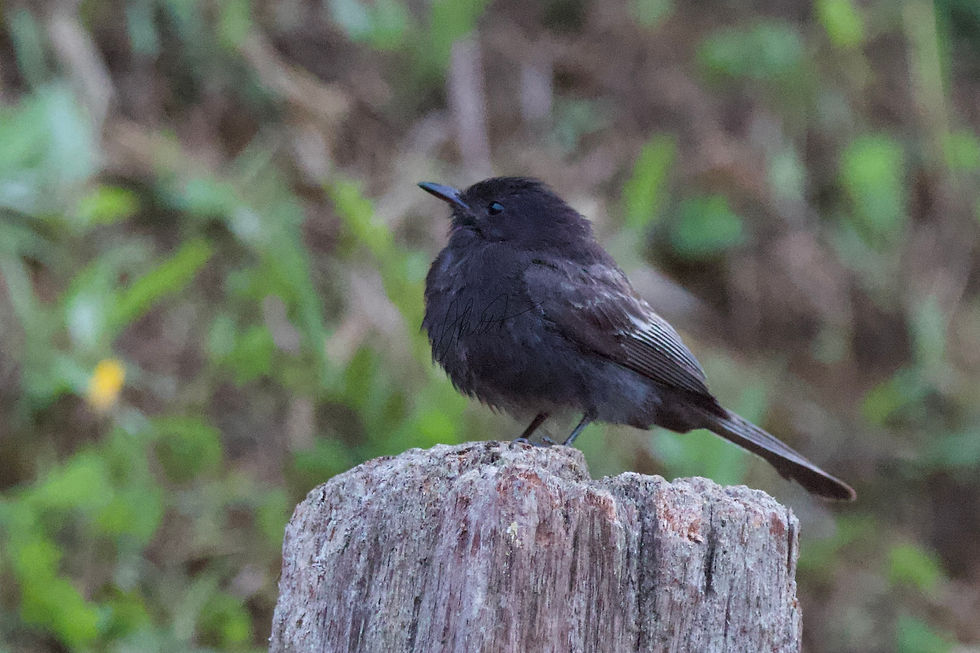
Right away we were greeted by some Ruddy Ground Doves, as well as Acorn Woodpeckers and Black Phoebes. The park follows a stream, and along here are groves of bamboo, dwarf bananas and heliconia plants.


The latter two were very attractive to a variety of birds. Blue-Grey Tanagers and Thick-billed Euphonias were everywhere, Summer Tanagers and Bananaquits joined them. Below we observed Black-billed Thrushes running along the ground. We had some brief rain, so the thrushes were busy picking worms and insects out of the leaf litter. They also would occasionally fly up to the banana plants and take a couple bites.


Up above there were also fruiting trees, and these were also attractive to birds. One tree in particular was full of Orange-chinned Parakeets, a species which was common in most places we would visit during the trip. Also present in the tree were a couple Acorn Woodpeckers, an Acadian Flycatcher, and nearby an Olivaceous Piculet and Red-tailed Squirrel, the latter of which was busy gathering some nesting material from the roots of an epiphytic plant.


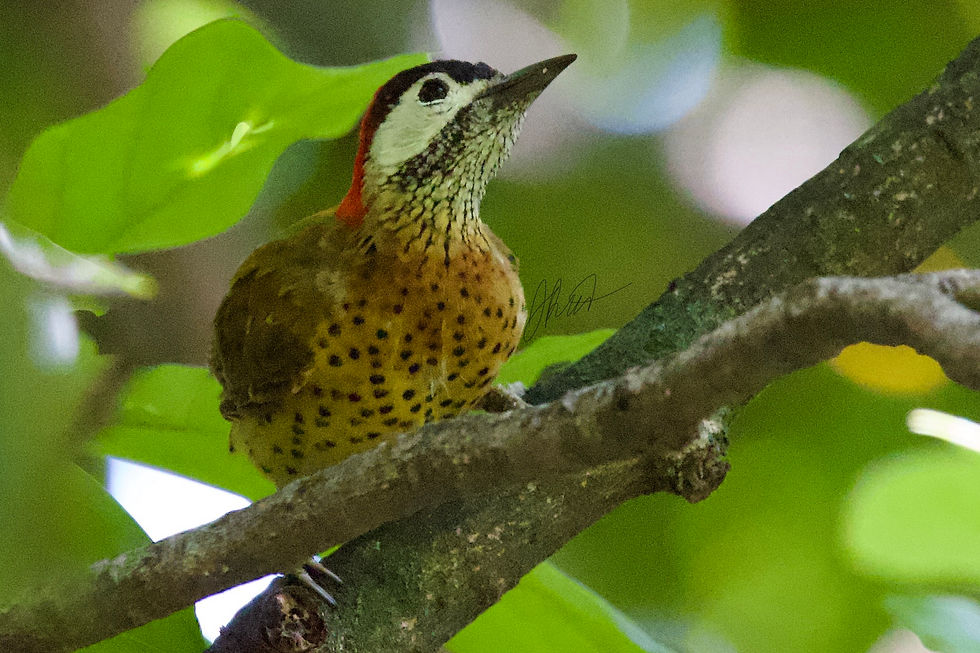
A bridge crosses the river, and on the other side we enjoyed a much-needed coffee and water break after some intense birding. During our break, we were able to observe a Streaked Flycatcher and a Spot-breasted Woodpecker.


Afterwards we made our way down towards a nearby park, Parque De La Bailarina. Here we managed to get several more birds, including some Yellow-crowned Amazons which flew over, Scrub and Blue-necked Tanagers, and pair of Bar-crested Antshrikes. On the lower trunks of some of the larger trees we observed pairs of Yellow-headed Geckos. These tiny geckos are diurnal and spend most of their lives on tree bark less than 5 feet from the ground. It was neat for me to see this species in the wild, as I have kept them a couple times in captivity.


Just as we were leaving, a pair of Scarlet Macaws flew overhead. Unbeknownst to us, this would be the start of a rivalry between us and the macaws. On our way back to the hotel, we were also
fortunate to get looks at an Andean Motmot in the first park, our last real bird for the day.

After checking into the hotel, we headed over to a local restaurant (there's many around the hotel) called Beer Station.


Day 2
The following day, we woke up early for a birding outing. We were picked up at the hotel, and met our guide for day, Daniel, from Birding Medellin.

Our destination was La Romera, a spot about 30 minutes from our hotel. The habitat is a transition between traditional lower elevation forest and open grassy areas, with admixture of higher elevation plant species. The result is a mix of birds from higher and lower elevations.
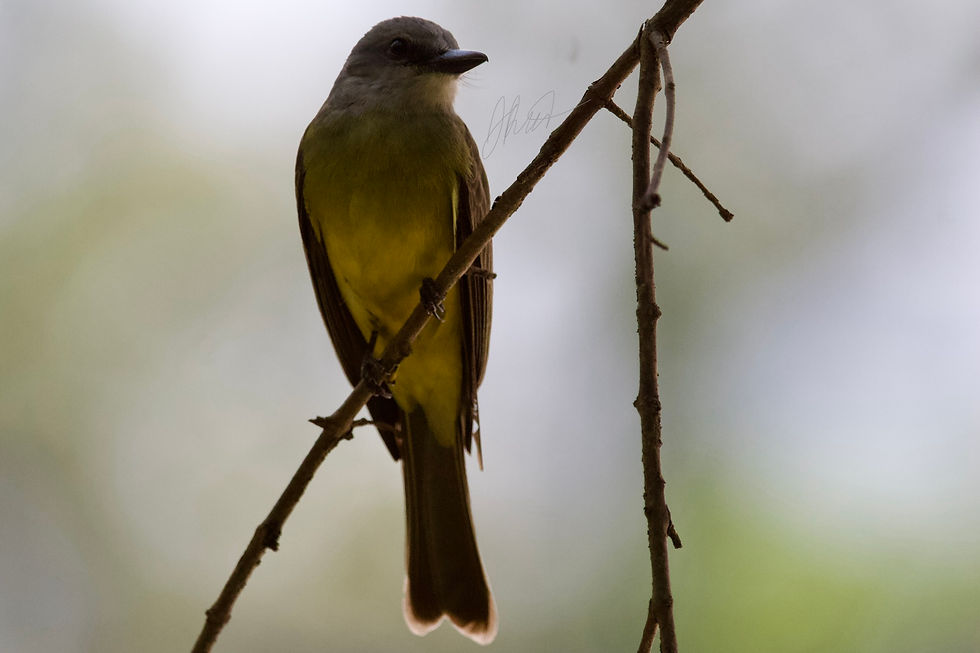
A stop along the way revealed some birds of open country, Yellow-bellied Seedeaters, and Shiny Cowbirds. Cattle Tyrants perched on the wires nearby, and Black Phoebes flitted out to catch insects on the wing.


Further up the road, we reached our destination, where we would begin our hike. We were greeted by a cacophony of birds, mostly Colombian Chachalacas who were calling to each other across the valley. Some were perched almost directly above us. At first, the trail follows a fenceline, with forest upslope and grassy areas below. At the edge, a colony of Russet-backed Oropendolas were tending their nests. These birds build purse-shaped nests up to 6 feet long, made from strands of tightly woven strips they tear from palm fronds. It's thought that these nests help deter predators from reaching in and grabbing their nestlings, particularly toucans. Oropendolas are large Icterid blackbirds, related to grackles, cowbirds, meadowlarks, orioles and Red-winged Blackbirds, among others. Like many blackbirds, they make a variation of the classic chack call, but are also well known for having some crazy, otherworldly sounds! We were lucky enough to hear some of these.


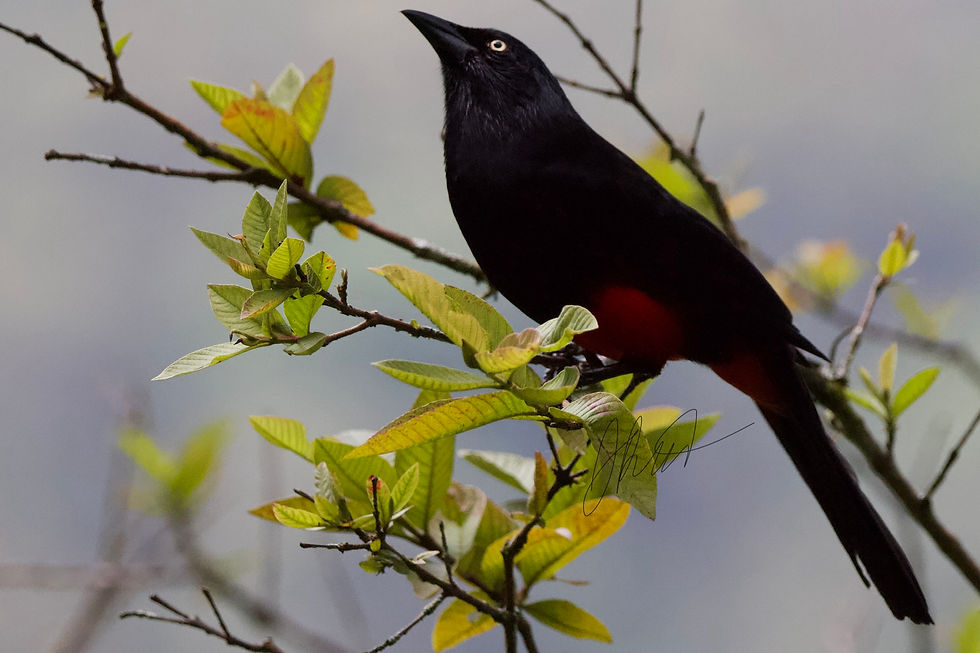
Speaking of grackles, it was here that we got some looks at the endemic Red-bellied Grackle. These stunning birds were foraging along the forest edge, picking at insects and seeds in the branches. Unphased by us, these birds allowed a close approach.

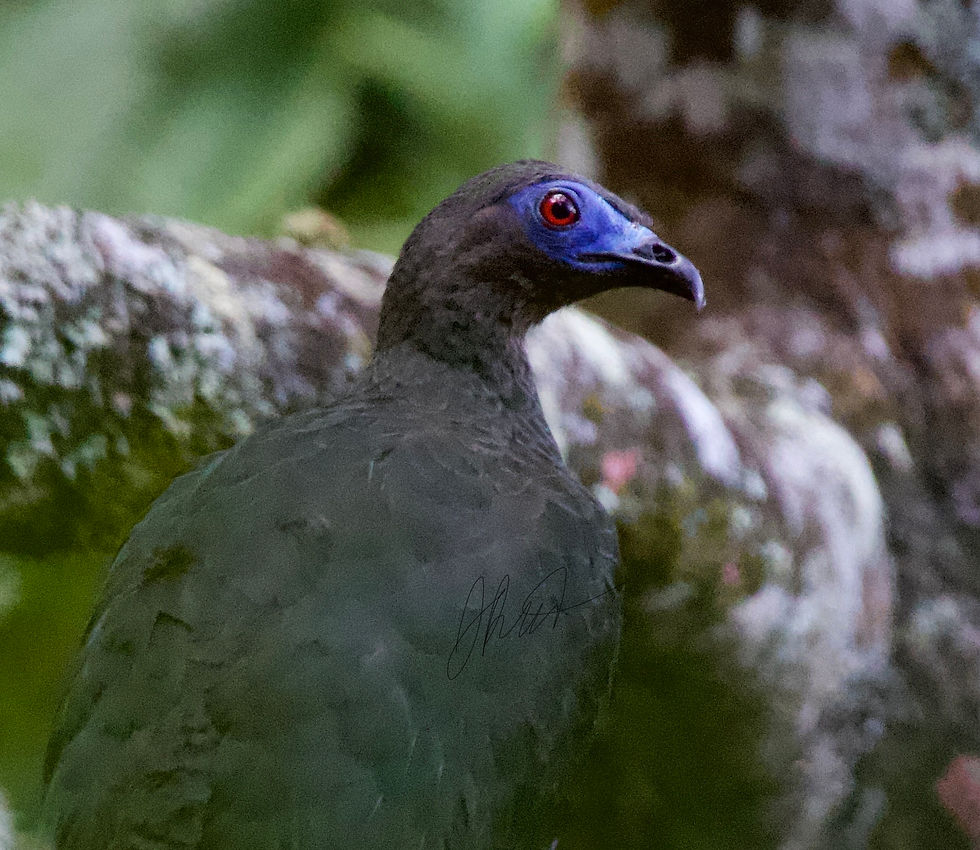
As we rounded the corner, we caught a glimpse of a Sickle-winged Guan. Like the chachalacas, these birds are Cracids, large birds that are distantly related to things like pheasants, turkeys and chickens. Sickle-winged Guans are much shyer than chachalacas, and so we quietly angled ourselves to get a good look.


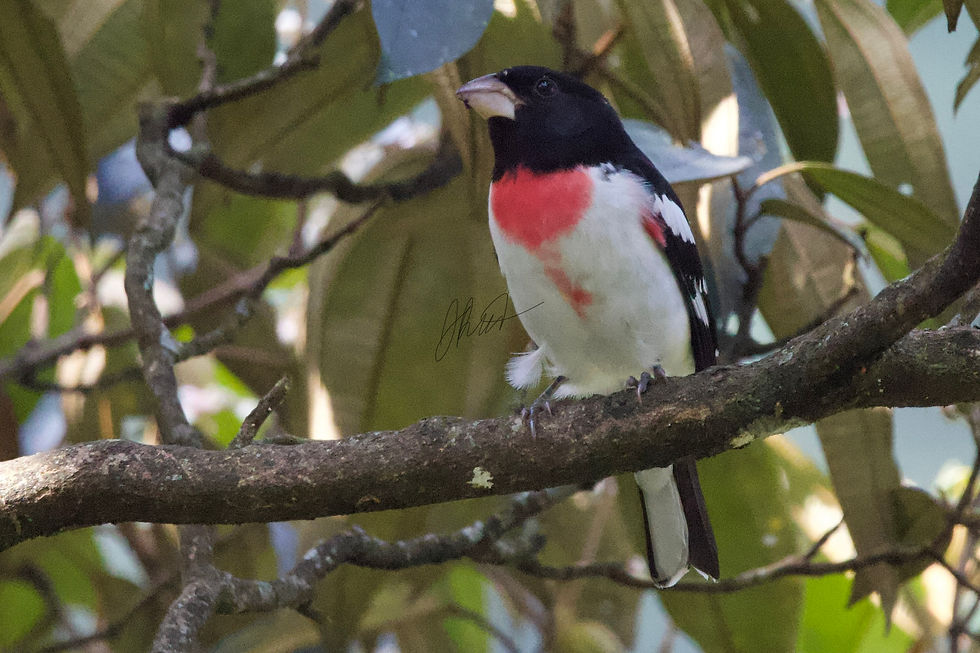
Coming up the hill, we were stopped by an overhanging flowering tree, which had gained the interest of a Blue-chested Hummingbird. A small fruiting cecropia was also nearby, and Daniel explained that cecropias are important for fruit eating birds, as they produce fruit all year long, and you only needed to sit and wait as something would eventually visit. Sure enough, the tree delivered, and some migrants showed up: Rose-breasted Grosbeaks and Scarlet Tanagers. Black-capped Tanagers also stopped by, and shortly after, so did a Southern Emerald Toucanet! This last bird was shy and unfortunately didn't allow for good looks.


Meanwhile all around us were a host of other birds singing. In the underbrush we could hear Grey-breasted Wood-Wrens and somewhere in the trees below us was the beautiful song of an Andean Solitaire. We were told that it was a bird we were unlikely to see, so we didn't get our hopes up. Surprisingly though, one did show briefly right next the trail, only a few steps up the path!

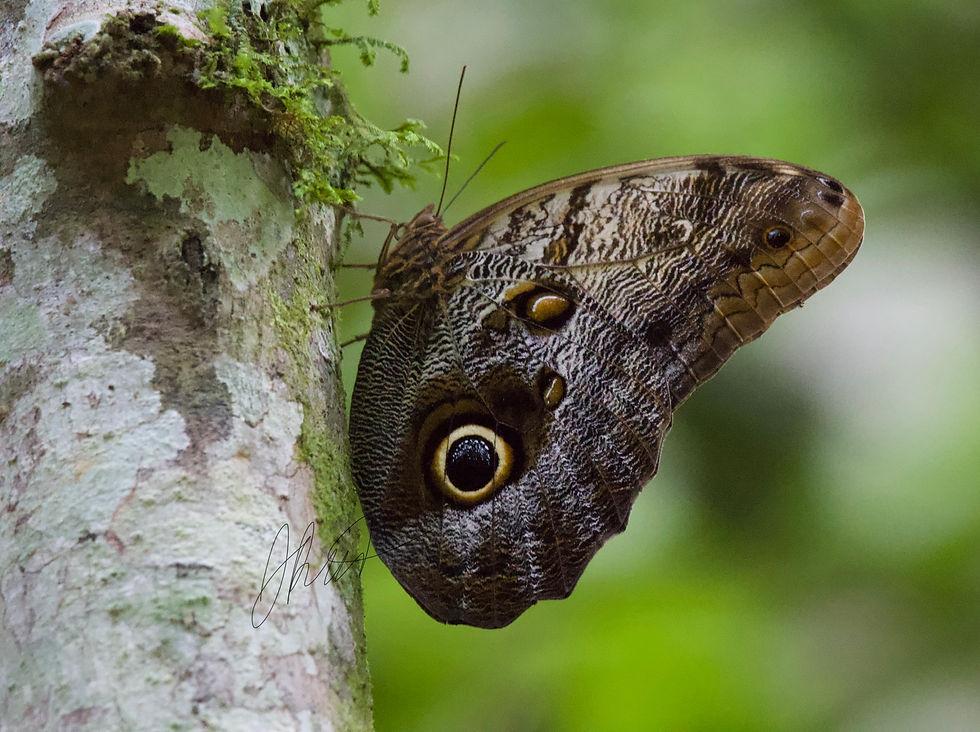
From here, we would head toward a spot which is great for the localized and endemic Golden-headed Manakin. Along the way we had a nice look at Owl Butterfly that was perched on the trunk of a tree. Named for the stunning eyespots on the undersides of their wings, these butterflies spend the day hiding away and awaiting sunset, when they are most active. With eyes attuned to low-light conditions, they fly through the forest searching for fallen fruit, because they don't visit flowers!


After a long stakeout at the Manakin lek, we were rewarded with very brief looks. Not to be outdone, however, was a Grey-breasted Wood-Wren further up the path.

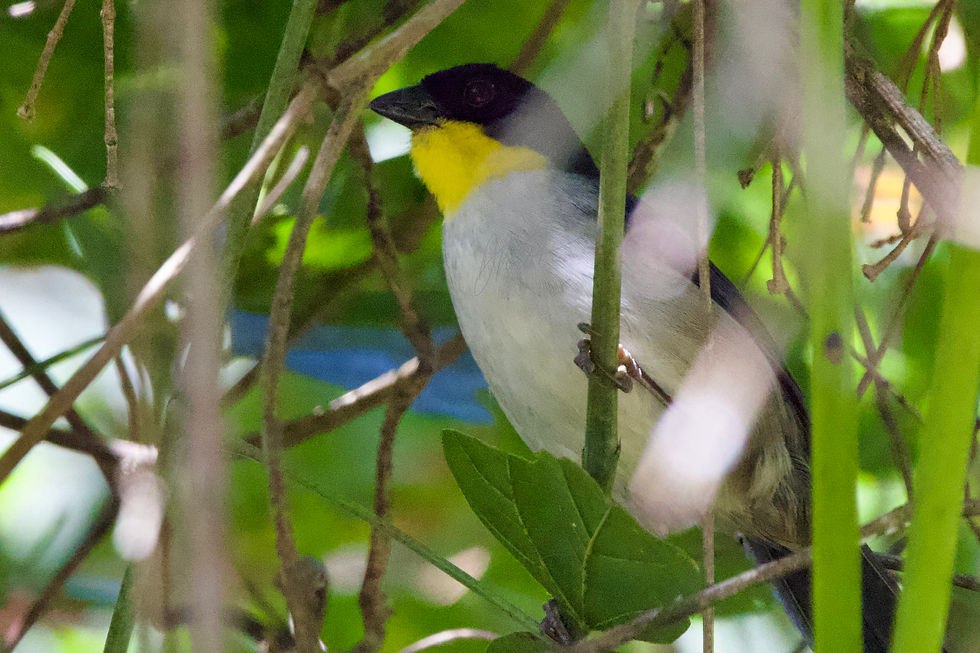
After a short breakfast break, we made our way back towards our starting point. Before arriving, we spotted a pair of Slate-throated Redstarts building a nest along the path, and overhead we could hear and spotted both a Golden-Olive Woodpecker and a Red-headed Barbet. Further up, a pair of White-naped Brushfinches showed.


Back at our pickup spot, at the oropendola colony, we observed a Giant Cowbird. This icterid, like all cowbirds, is a brood parasite, and specializes in laying eggs in oropendola nests, who raise the cowbird chicks. Down below, we were lucky to see a pair of Azara's Spinetails busy gathering insects to feed their own chicks.


We were picked up, and after getting back to our hotel and having a lunch break, we headed back to the park to see if there were any new birds. There were, and we managed to spot some Steely-vented Hummingbirds and a Black-throated Mango.




Day 3
The following day, we met up with Sebastian from Golden Tanager tours. Our destination was the same as the previous day, La Romera. This time, however, we started walking up there from the town below. This would reveal some new bird species for us, first of which was a lovely Yellow-faced Grassquit, followed by a family of Acorn Woodpeckers who were joined by some Spectacled Parrotlets.


We continued on and were able to get a very clear view of an Orange-billed Nightingale-Thrush. While not brightly coloured, this thrush has a beautiful voice and is not normally so easily seen. Across the road, a group of Southern Rough-winged Swallows rested along a wire, while Moustached Wrens called in the underbrush.

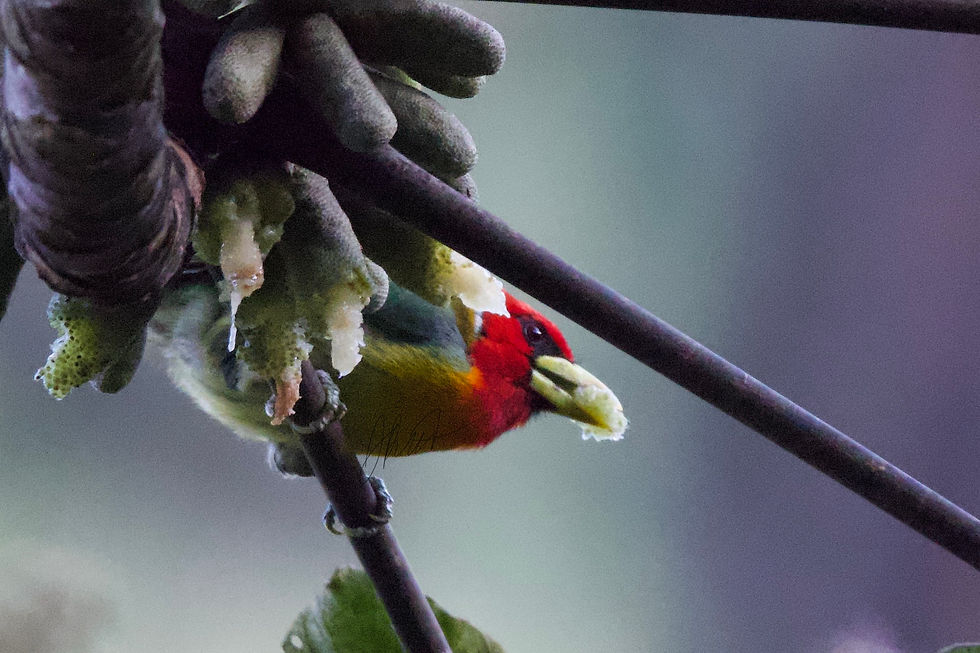
Up the road, we very fittingly saw a pair of Golden Tanagers foraging along the roadside. These gorgeous birds flitted amongst the mosses and picked insects out. Not long after, we saw a Red-headed Barbet that stopped to feed on some cecropia fruits, and an Olivaceous Piculet joined it in the tree.


As we came into La Romera, the Red-bellied Grackles, Colombian Chachalacas and sickle-winged Guans were once again there to greet us. Still excited by the previous day's sighting of the grackles, we were given even closer views this time!


As we were coming up to the spot, I was telling Sebastian how we had managed to see an Andean Solitaire, only to see two in the exact same tree! This pair stayed much longer and posed nicely for us.

Later on, we were alerted to the presence of an incoming mixed-species flock by the calls of Slate-throated Redstarts, which are often the leaders. This group including a few Common Chlorospingus, a Three-striped Warbler, and a Slaty-capped Flycatcher.


Along the pathway one side turns into a small cliff, and this is where I got eyes on a Blemished Anole, which was so unphased by me it allowed me to touch its back. From here we turned back, and we managed to get looks at the Golden-headed Manakin after some patient waiting.


On our way back down, we had a few more goodies, including a pair of Green Jays (the race here is different than those further north and might eventually be split) and a Flame-rumped Tanager. Overhead both Chestnut-collared and White-collared Swifts passed by. We were seen off by a group of Smooth-billed Ani and a Black-winged Saltator.


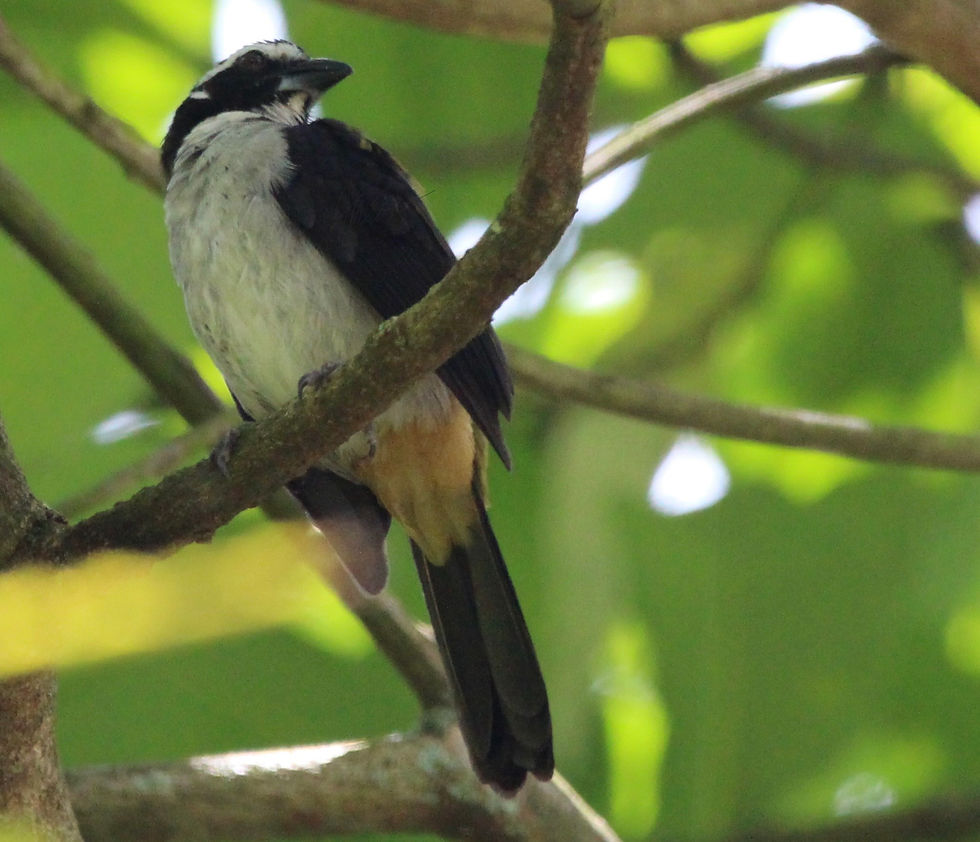
After a good day's birding a piece of cheesecake and a latte were a good way to close off and prepare for the next leg of the trip - the Darien.

Comments